Béton Brut · Education · 2026
An interactive museum that makes Brutalist history easy to explore
Overview
Architecture students often struggle with dry textbooks. To solve this, I designed an interactive digital museum that replaces passive reading with active exploration. The platform transforms the study of 'urban eyesores' into a compelling narrative, making Brutalist history accessible and engaging.
The problem
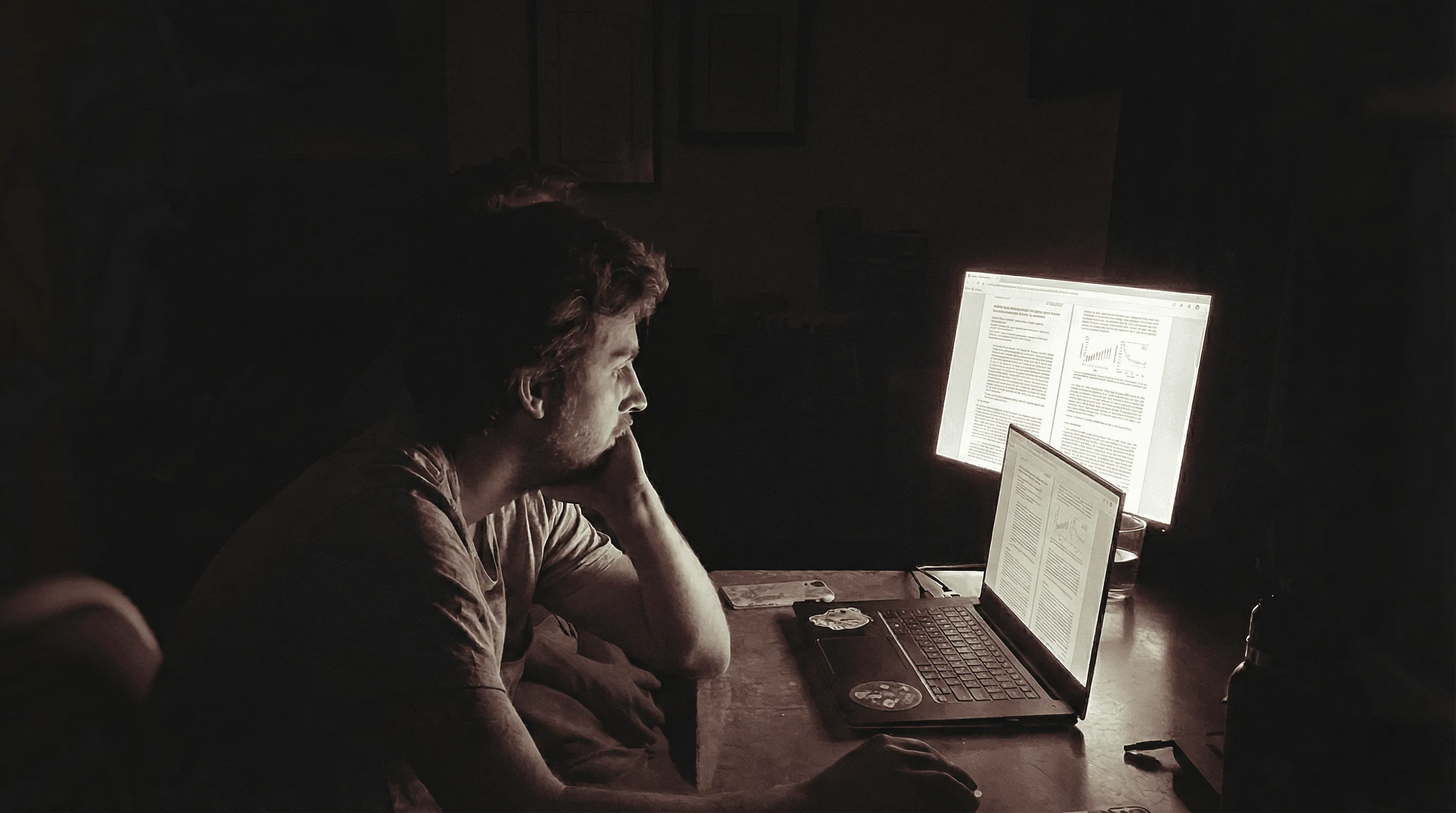
Architecture students struggle to connect
with Brutalist history using traditional tools
Through interviews with 5 architecture students, three main barriers emerged.
Inaccessibility
Existing resources overwhelm visual learners with heavy text, burying complex historical data.
Scattered Information
Research feels broken. students have to jump between unrelated sites to find the full story.
Poor Usability
Navigating the filters is unintuitive and heavy, breaking the student's creative flow.
The solution
Transforming static data into an engaging, interactive learning journey.
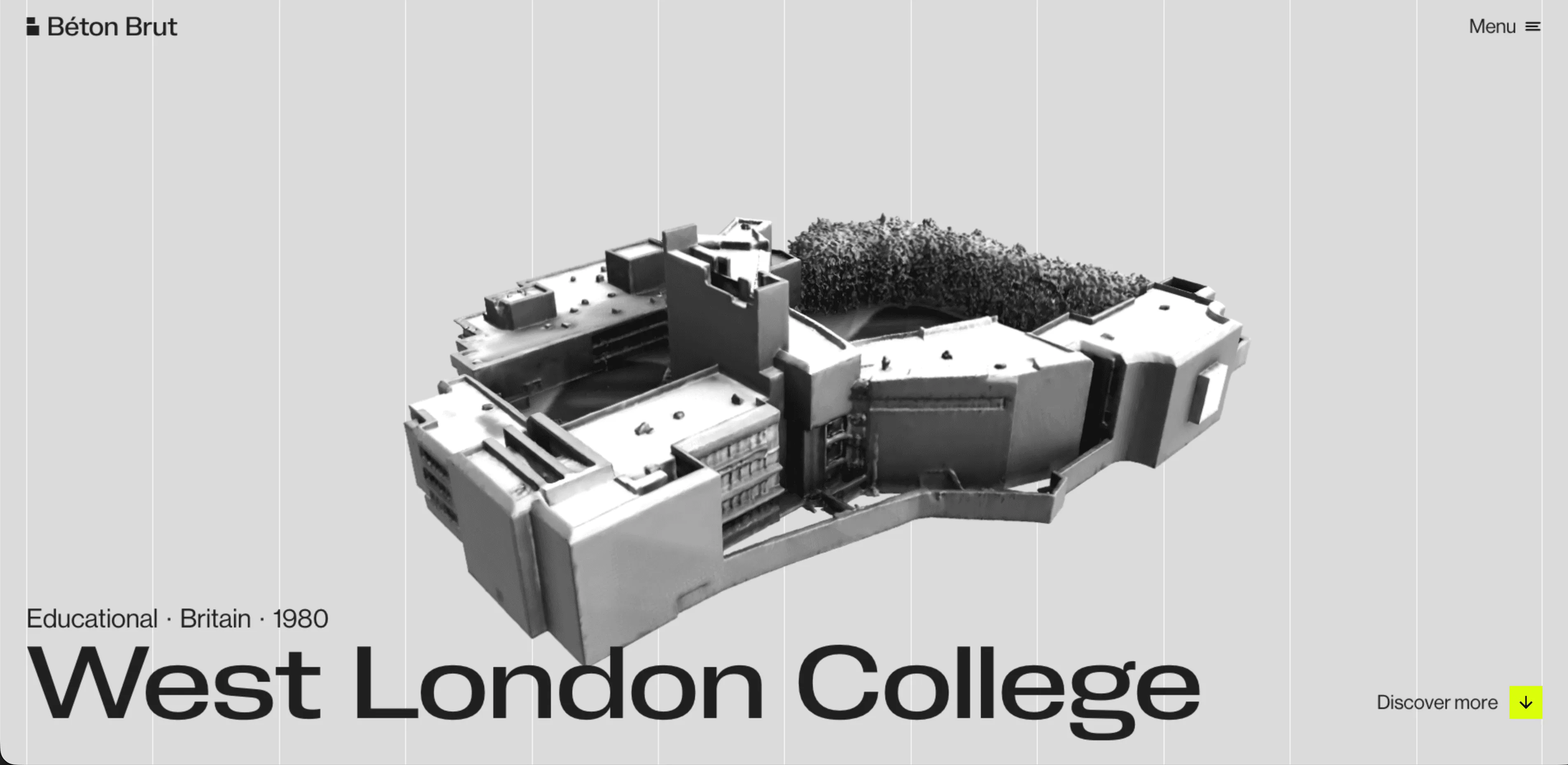
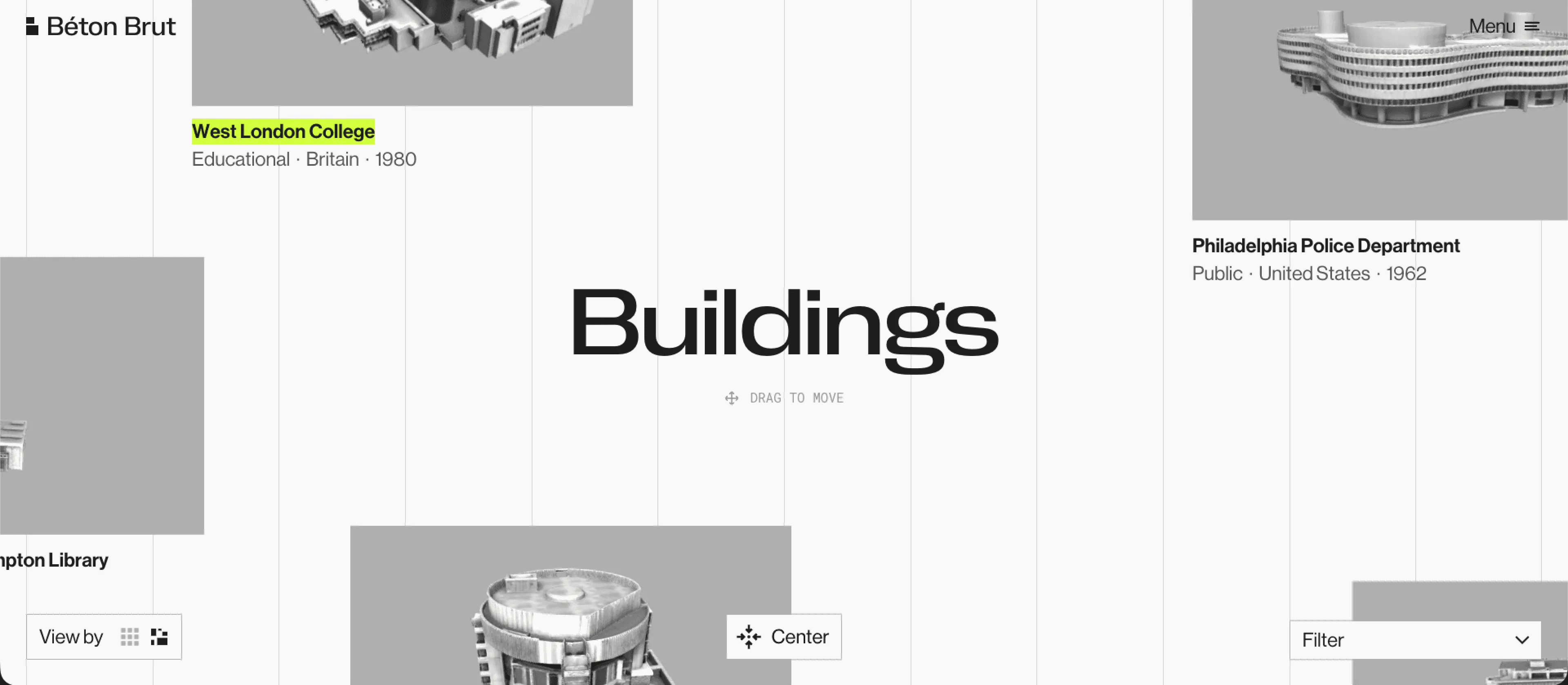
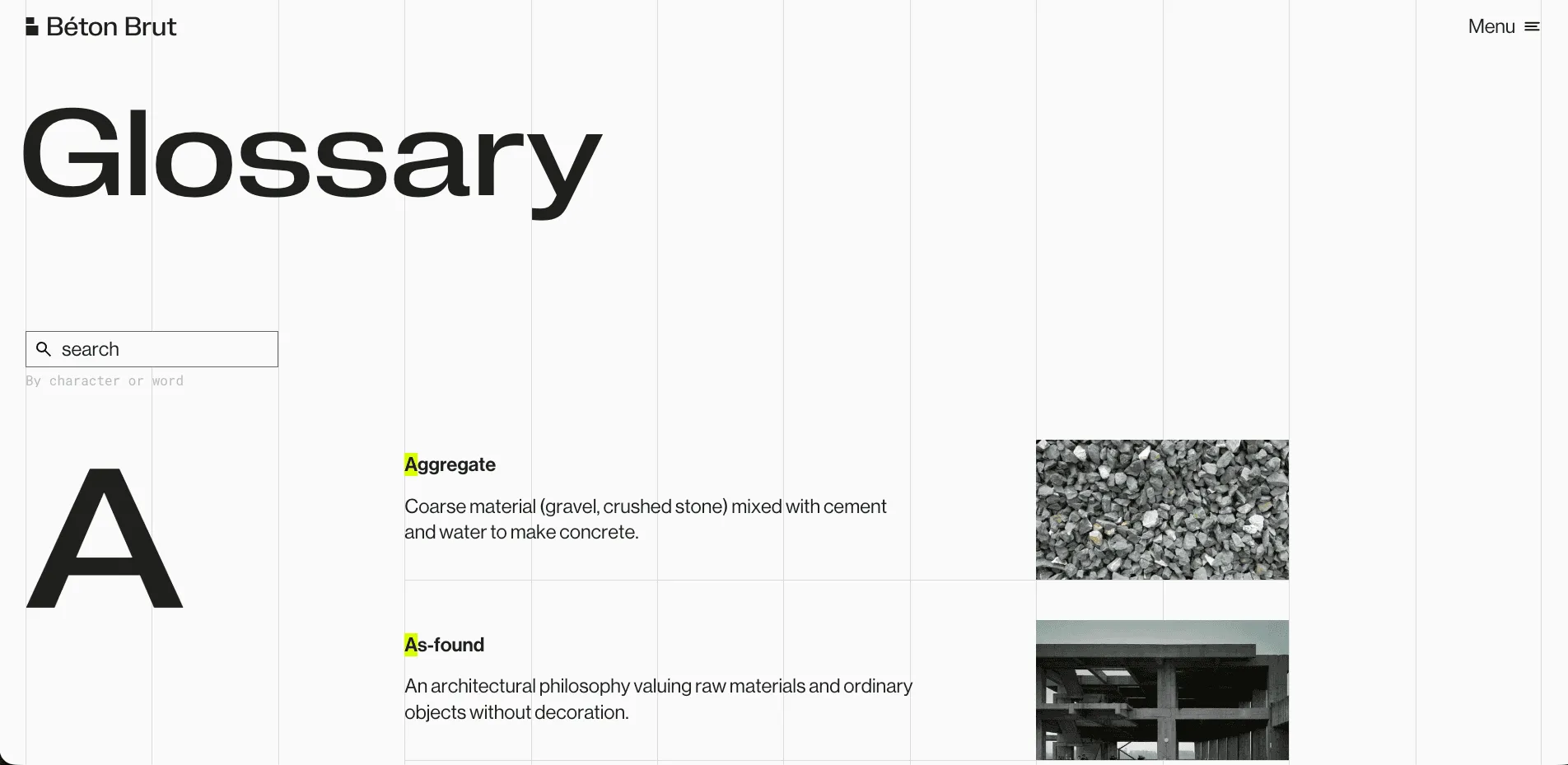
The platform uses a structuralist UI, interactive glossary, and dynamic filtering to turn architectural history into an engaging experience.
Sitemap
Structuring the Learning Experience using Three Layers of Discovery
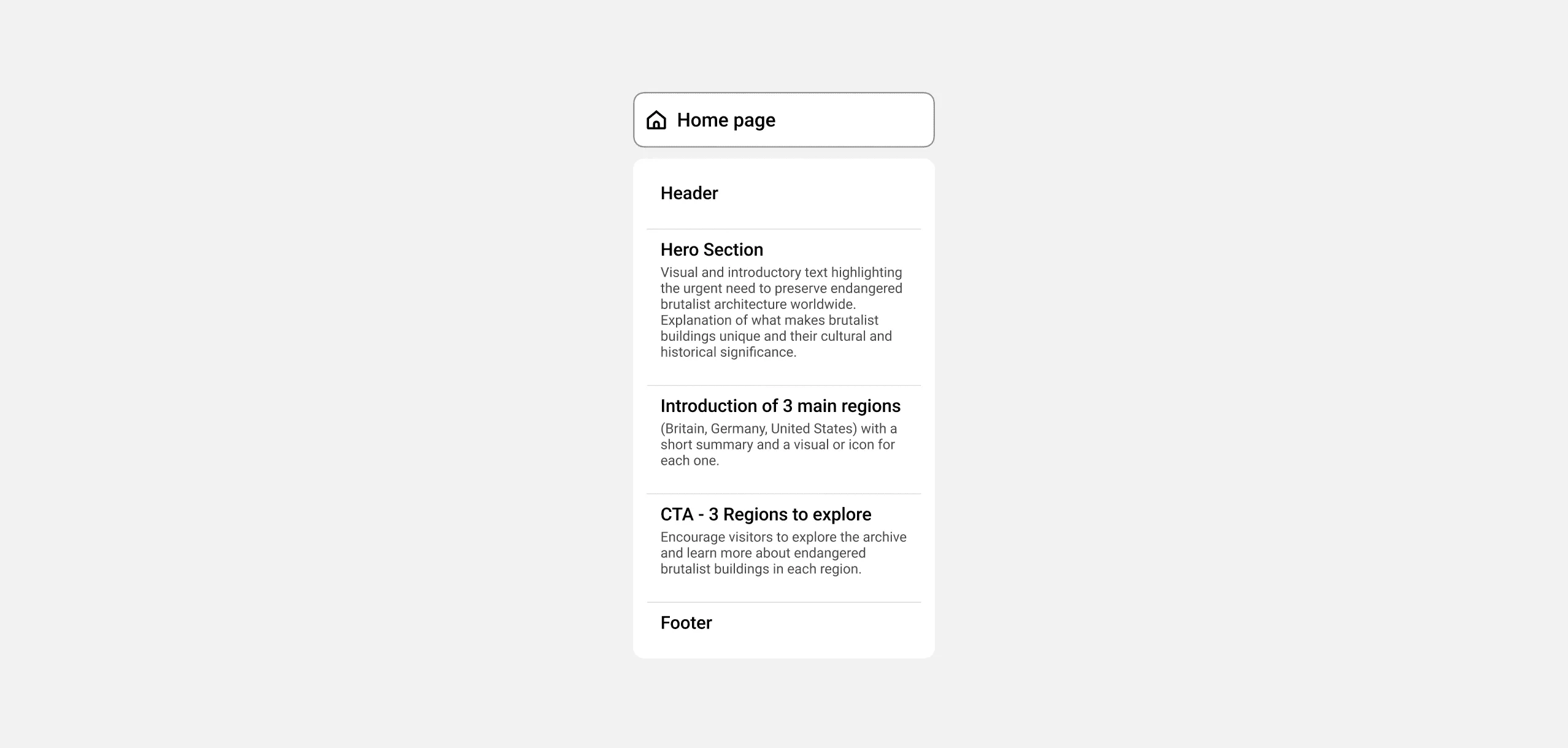
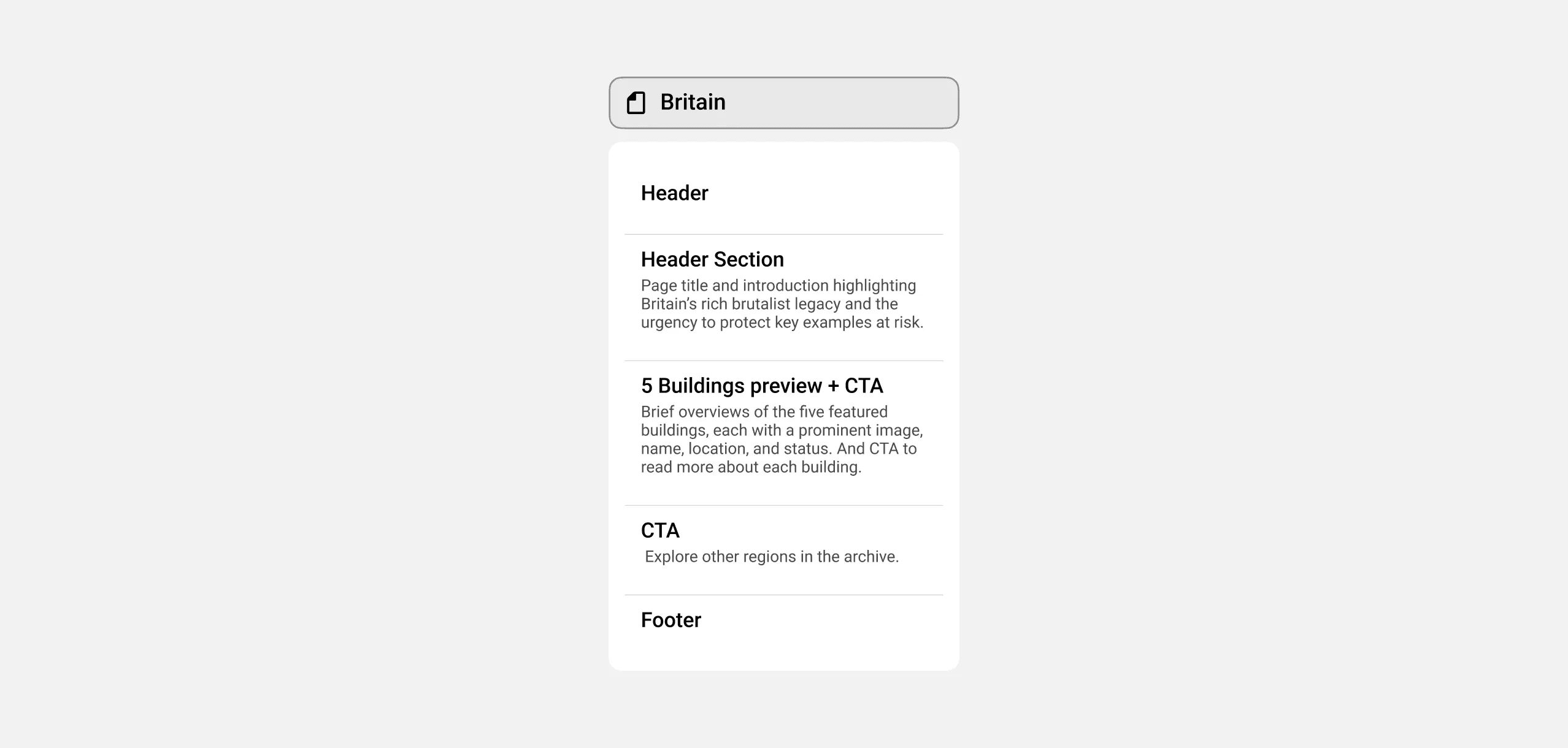
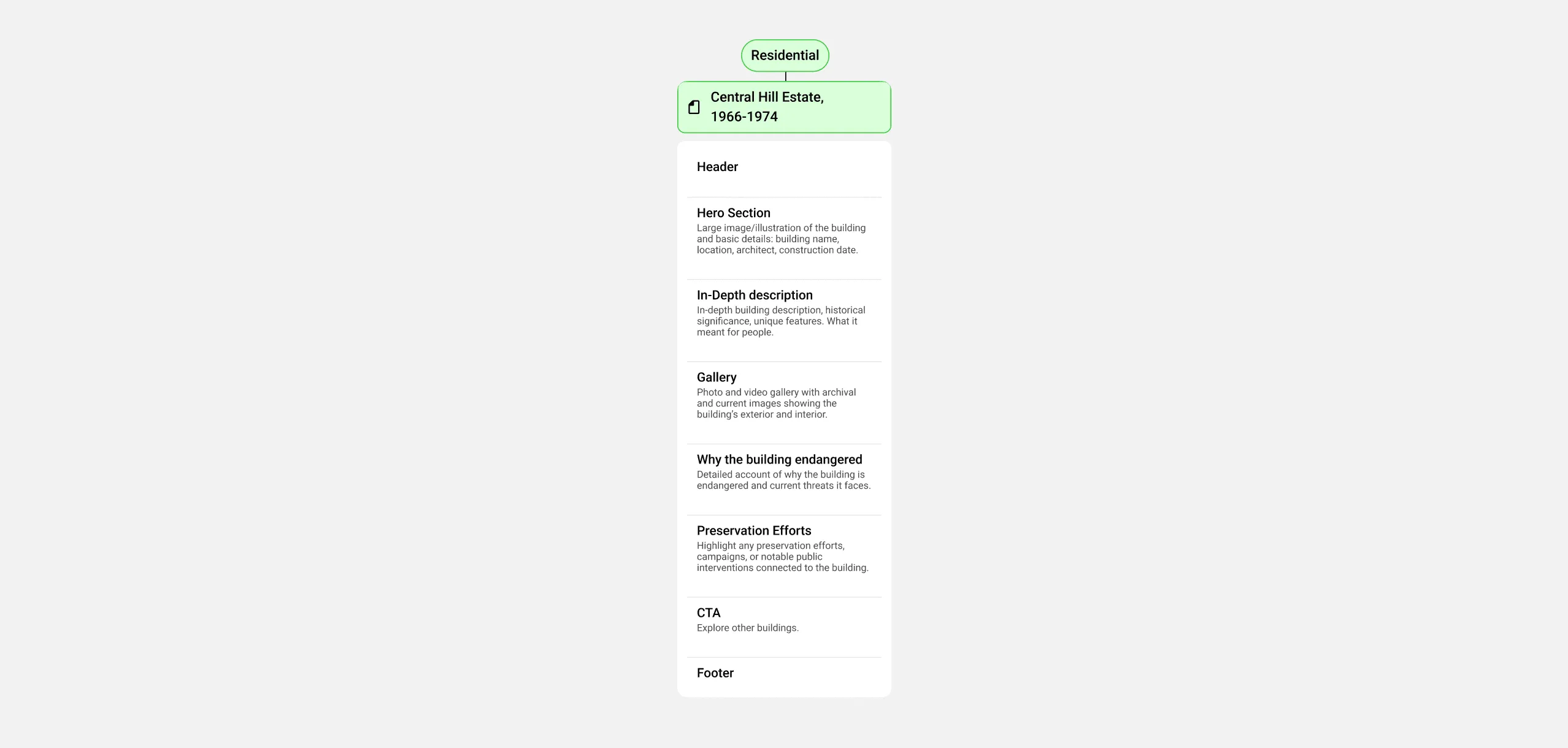
Based on the interviews and the student persona, I organized the site into three simple layers to help the user learn.
1. Introduction
Designed as an onboarding experience, this layer uses scroll interactions to guide users to three key geographic regions
2. Main region
A regional deep dive featuring an interactive timeline and five key buildings for in-depth study.
3. Building analysis
Detailed building analysis with glossary integration. A final CTA guides users to the next landmark.
User flow
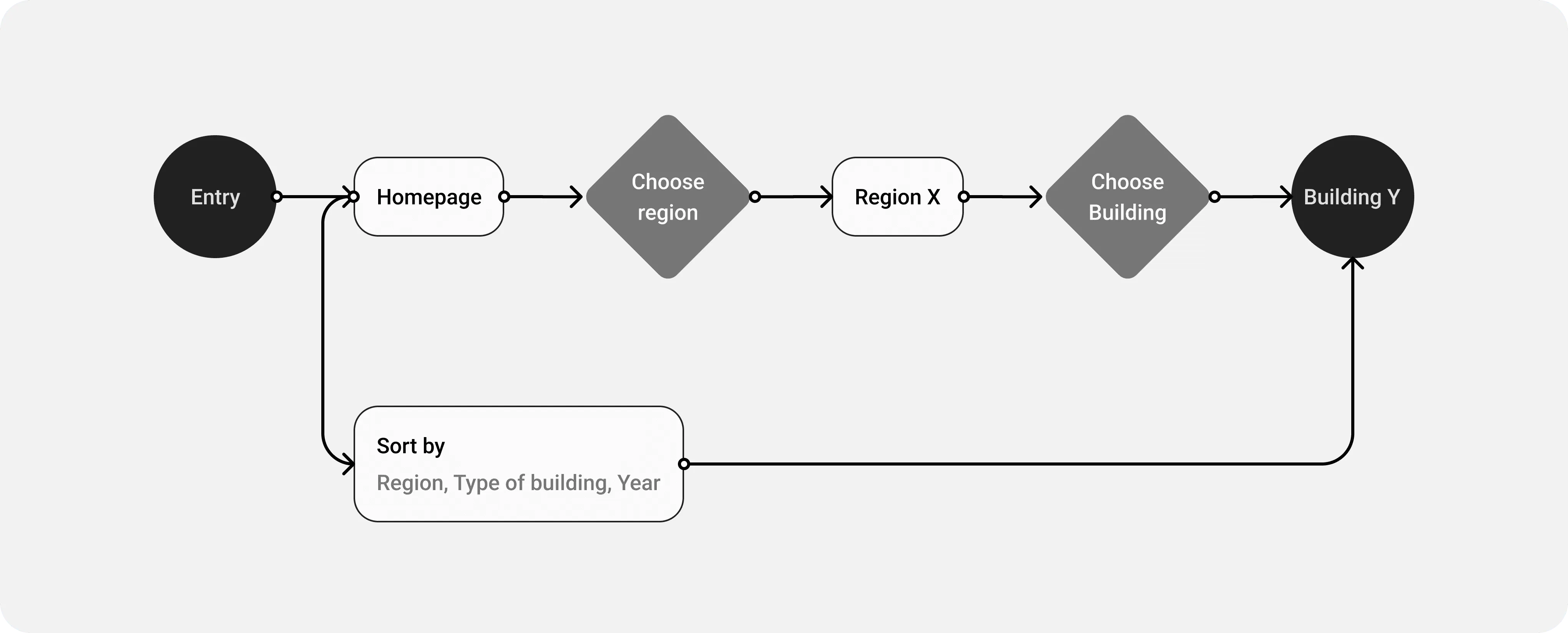
The main path through the site
After building the sitemap, I mapped out the user journey: from the home page, through a region, to a building.
Wireframe
Home page
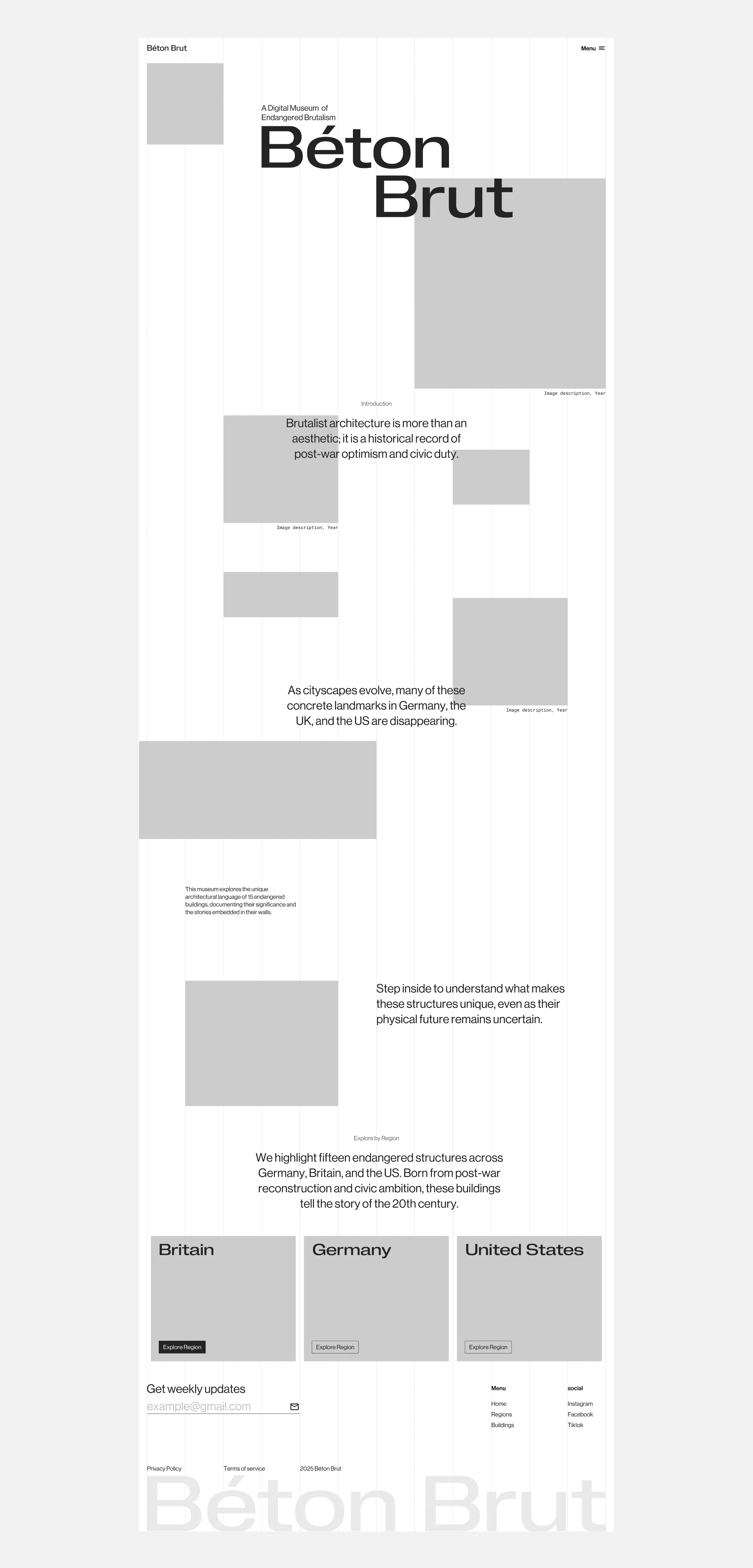
Wireframe
Region page
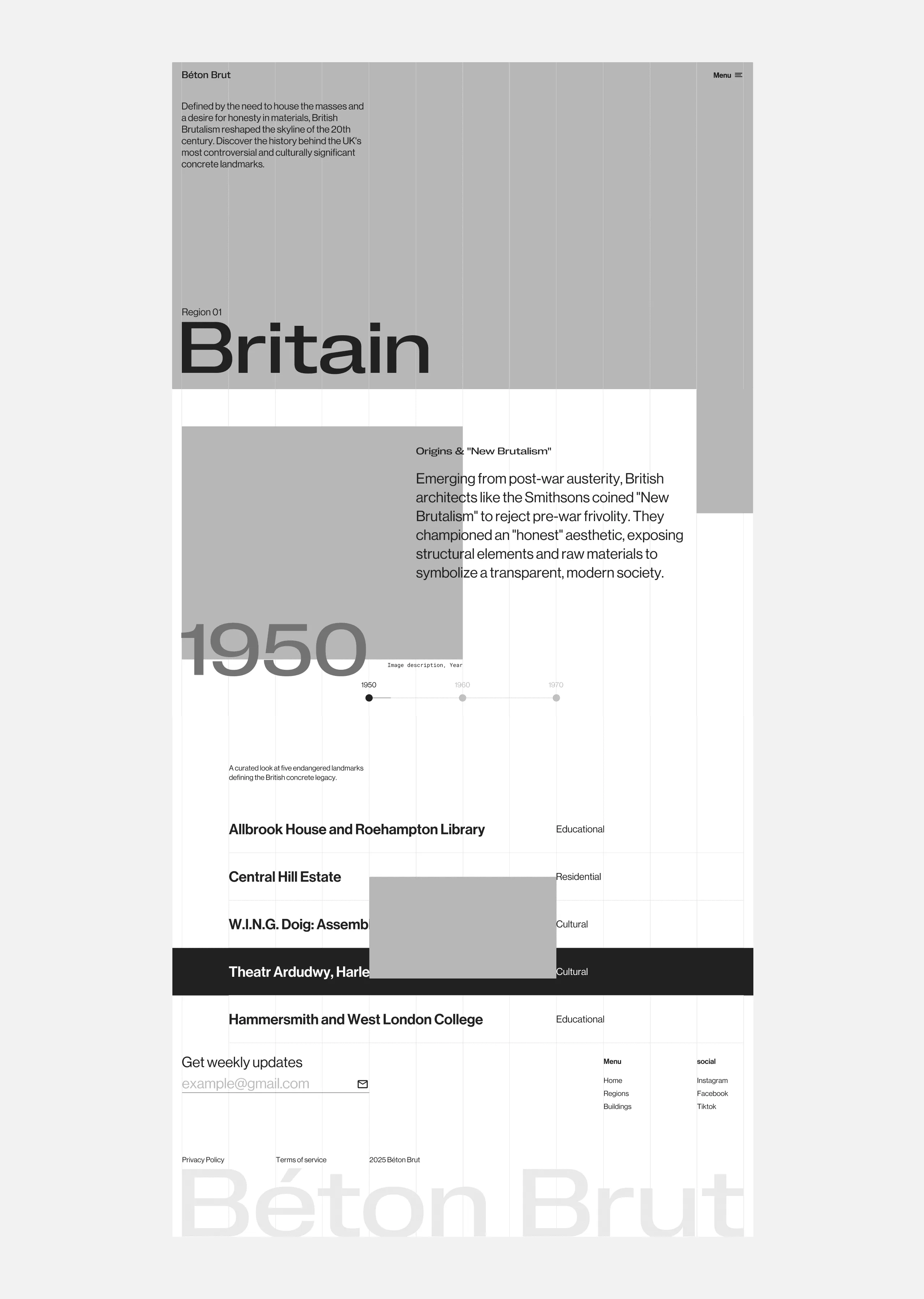
Wireframe
Building page
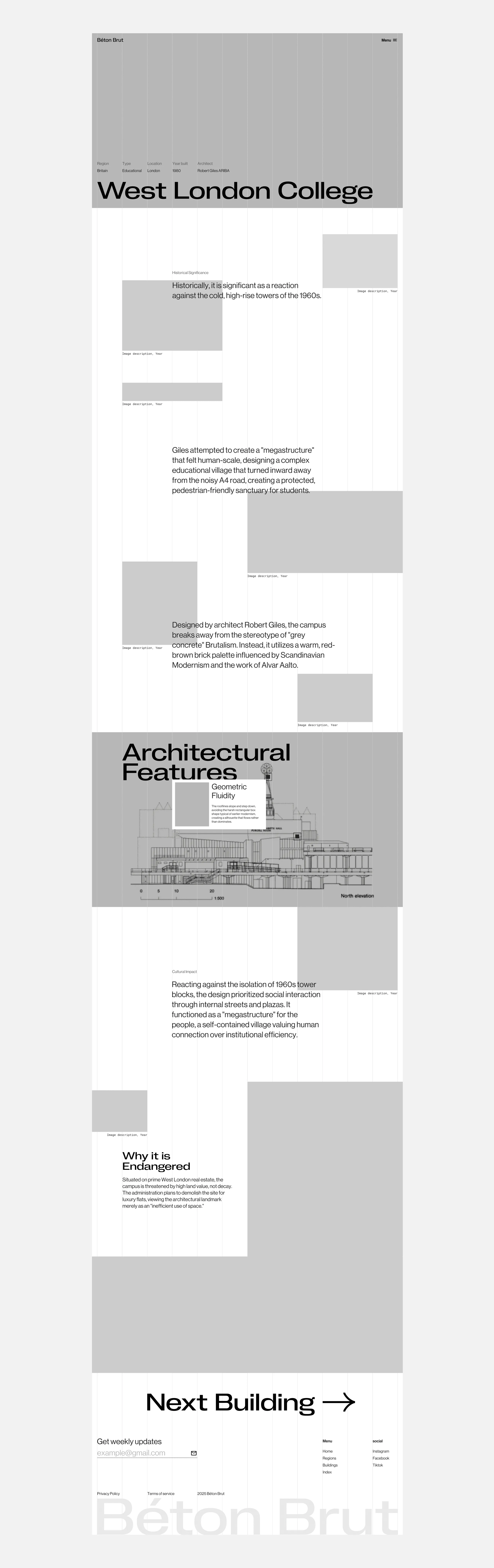
Style guide
A structuralist look, built from concrete
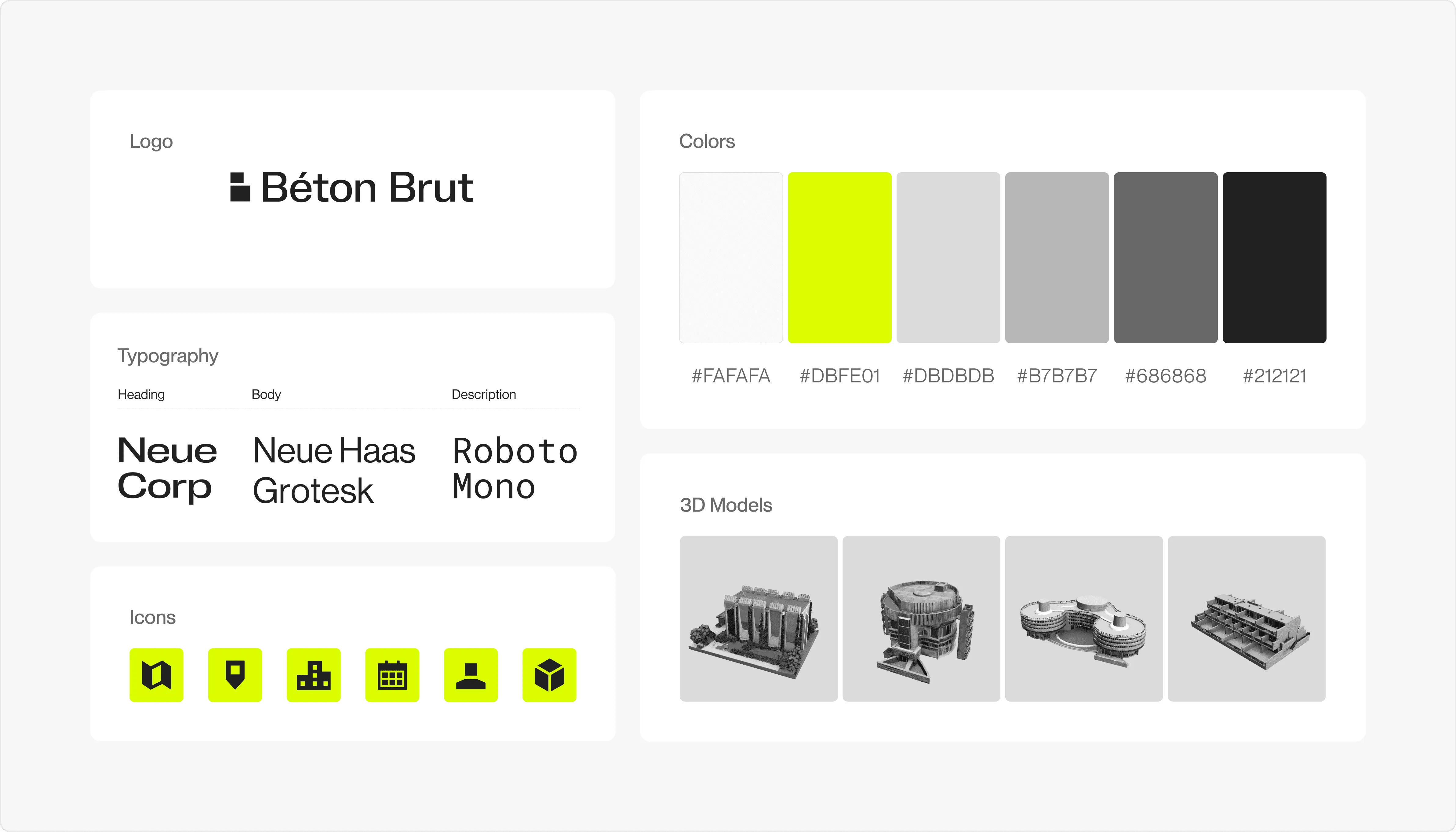
The design
The main flow
After solidifying the visual style and gathering inspiration, I started designing the main flow and additional pages.
Buildings page
Shop
Reflection
For a visual learner,
accessibility is engagement
The content is historical, but the user is a modern visual learner. Replacing dense text with interactive 3D models of the buildings and a timeline turned research into exploration.